By Dr. Christopher L Huerta, MD.
We are all exposed to UV radiation from the sunlight that reaches the surface of the Earth. It can be a minor annoyance or serious, causing skin cancer or cataracts.
Long-term, unprotected exposure to UV radiation—specifically UV-B rays—accelerates the aging and clouding of the eye's natural crystalline lens, leading to cataracts.
Exposure to ultraviolet (UV) radiation—whether from sunlight or artificial sources like tanning beds—is the single leading environmental cause of malignant melanoma. UV radiation is the primary cause of both Basal Cell Carcinoma (BCC) and Squamous Cell Carcinoma (SCC).
Together, these two types account for over 90% of all skin cancer cases and are collectively known as non-melanoma skin cancers, or keratinocyte carcinomas.
Ultraviolet Radiation
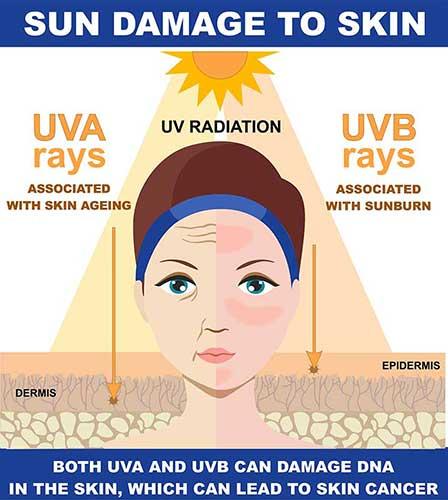
Short wavelengths are more energetic and more damaging. Very short wavelengths, such as gamma rays and X-rays, are highly energetic and damaging. UV-C is used in medicine to sterilize surfaces, air, and water, killing bacteria, viruses, and fungi. These are wavelengths in the 100-290 nm range. Although these are produced by the sun, they are usually filtered out before reaching Earth's surface.
UVB is in the range of 290-320 nm, which is mostly absorbed in the epidermis; it is largely responsible for “sunburns.” UVA1 (340-400 nm) and UVA2 (320-340 nm) are also very damaging. Both UVB and UVA can cause photoaging, hyperpigmentation, and skin cancer.
Sunscreen Protection
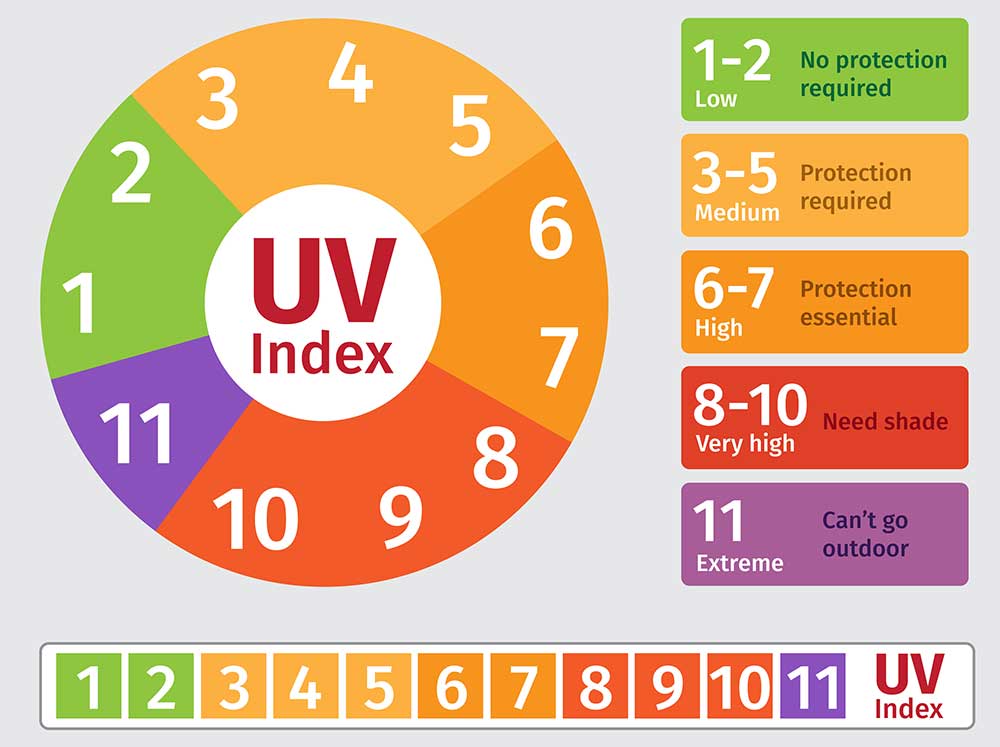
If your occupation requires you to be outdoors a lot, you need a consistent course of action. Wear a hat, gloves, long-sleeved shirts, and pants that block UV radiation while allowing air circulation to keep you cool. Wear wraparound sunglasses that block UVA and UVB. Apply a mineral (inorganic sunscreen) like zinc oxide or titanium dioxide. They provide broad-spectrum protection, primarily by absorbing UVA and UVB, and are photostable.
If you know you will be outside for an extended time during peak UV radiation, you should start early by eating foods that provide protection. They may not block the UVB or UVA waves, but can neutralize the effects. This is extremely important for children and outdoor workers. You need to start 2-4 weeks before exposure.
Eating plenty of cooked tomato paste, carrots, sweet potatoes, kale, spinach, and citrus (blood oranges) will allow internal protection. Also consider green tea, dark chocolate, and a variety of berries. Omega-3s also provide a unique barrier protection.
You can also take Polypodium leucotomas, a tropical fern native to Central and South America, which is sold as an oral supplement for systemic photoprotection.
What About Topical Sunscreen Products?
The FDA study of 32 broad-spectrum sunscreen products available in the USA found that 6 products failed broad-spectrum testing and that over 40% provide suboptimal UVA protection under outdoor solar conditions. Many of these organic molecules are absorbed through your skin. So what is the alternative?
Bemotrizinol is the newest one available. It is highly photostable and provides broad-spectrum coverage of UVB and UVA. It is the only one that has been available in Europe since 2000 and is GRAS (generally recognized as safe). Remember, it still has the drawback of having to be reapplied after sweating/immersion. It is also difficult to apply to sensitive areas (eyelids, lips, and ears).
-----------------------------------------------------------------------------
Dr. Christopher L Huerta, MD, is a board-certified emergency medicine specialist based in Midland, TX, and the Medical Director of SignatureCare Emergency Center in Midland, TX. He received his medical degree from Washington University in St. Louis School of Medicine and has been in practice for more than 40 years.